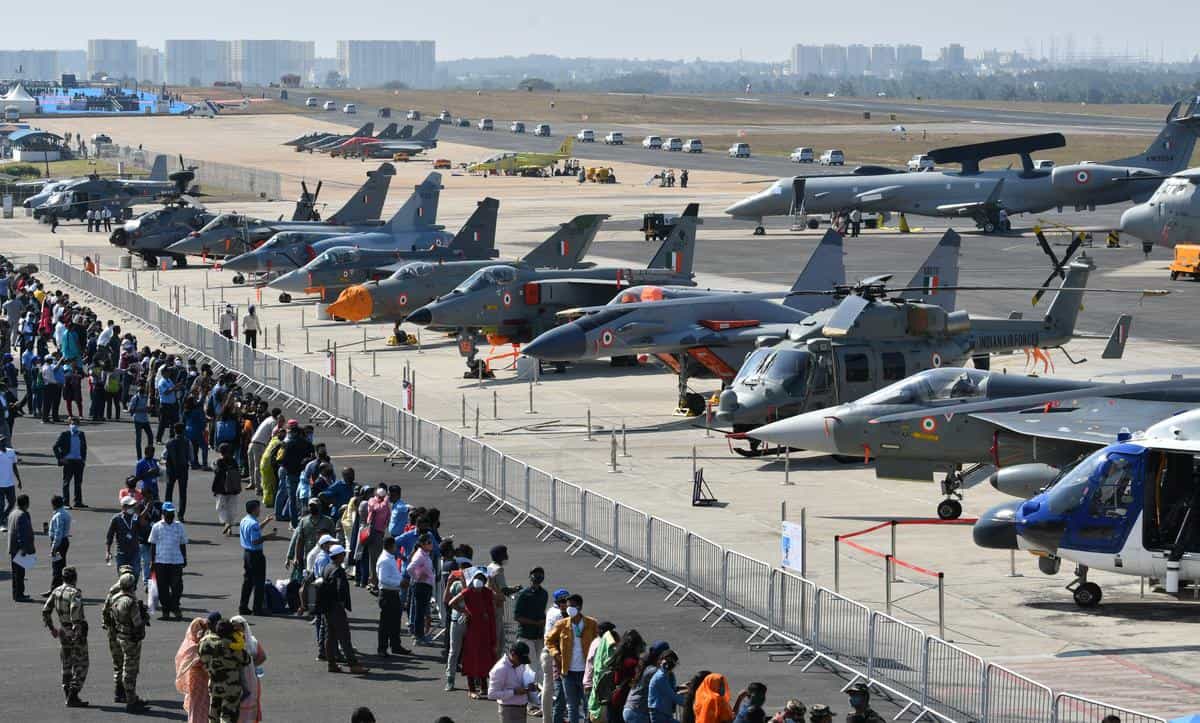
India’s Strategic Edge Over Bangladesh’s Air Defence: A Capability-Based
Analysis
Air defence systems play a critical role in protecting national airspace, key
cities, and military infrastructure. In South Asia, Bangladesh has made notable
efforts to modernize its air defence network in recent years. However, when
compared to India’s far more advanced and integrated air-power ecosystem, clear
capability gaps remain.
Bangladesh’s air defence structure is primarily
designed for point defence,
focusing on the protection of major urban centers such as Dhaka, important
airbases, and strategic installations. The system relies on a mix of
short-range surface-to-air missiles, conventional radar coverage, and limited
interceptor aircraft.
According to defence analysts, Bangladesh
operates Chinese-origin short-range missile systems and man-portable air
defence weapons, supported by 2D and limited 3D surveillance radars. These
systems are effective against low-flying aircraft and helicopters but offer
limited protection against modern threats such as stealth platforms, stand-off
weapons, and coordinated saturation attacks.
A major limitation is the absence of a multi-layered air defence architecture.
Unlike advanced systems deployed by major military powers, Bangladesh does not
operate long-range surface-to-air missiles capable of engaging targets far
beyond its borders. This creates gaps in coverage, particularly against
high-altitude or long-range threats.
India, by contrast, maintains a comprehensive
air and missile defence environment supported by airborne early warning
aircraft, satellite surveillance, electronic warfare platforms, and
network-centric command systems. These capabilities allow Indian forces to
detect and track aerial activity well before it enters contested airspace.
Electronic warfare is widely viewed as a
decisive factor in modern conflicts. Experts note that conventional radar-based
systems, such as those used by Bangladesh, can be vulnerable to jamming,
deception, and cyber-electromagnetic interference. India’s growing electronic
warfare capability provides a significant strategic advantage by potentially
degrading an opponent’s sensor and communication networks without direct
kinetic engagement.
Another key factor is India’s ability to
conduct stand-off operations,
enabling aircraft to launch precision-guided weapons from distances beyond the
effective range of short-range air defence systems. This approach minimizes
risk while maintaining operational effectiveness.
Despite these disparities, analysts emphasize
that Bangladesh’s air defence is adequate for its national security requirements
and serves as a credible deterrent against limited or asymmetric threats. The
system is not designed for high-intensity conflict with a major regional power.
India and Bangladesh continue to enjoy strong
diplomatic, economic, and security ties, making military confrontation highly
unlikely. The comparison, experts stress, remains a theoretical assessment
rather than an indicator of future conflict.
In modern warfare, control of information,
sensors, and electromagnetic space often proves more decisive than sheer
firepower. As regional air defence systems continue to evolve, integration and
technological depth will remain the defining factors of air superiority.
Comments
Post a Comment