How the United States Could Counter Russia’s S-500 Air Defense System in a War Scenario
An in-depth defence analysis of capabilities, limitations, and US counter-strategies
Overview
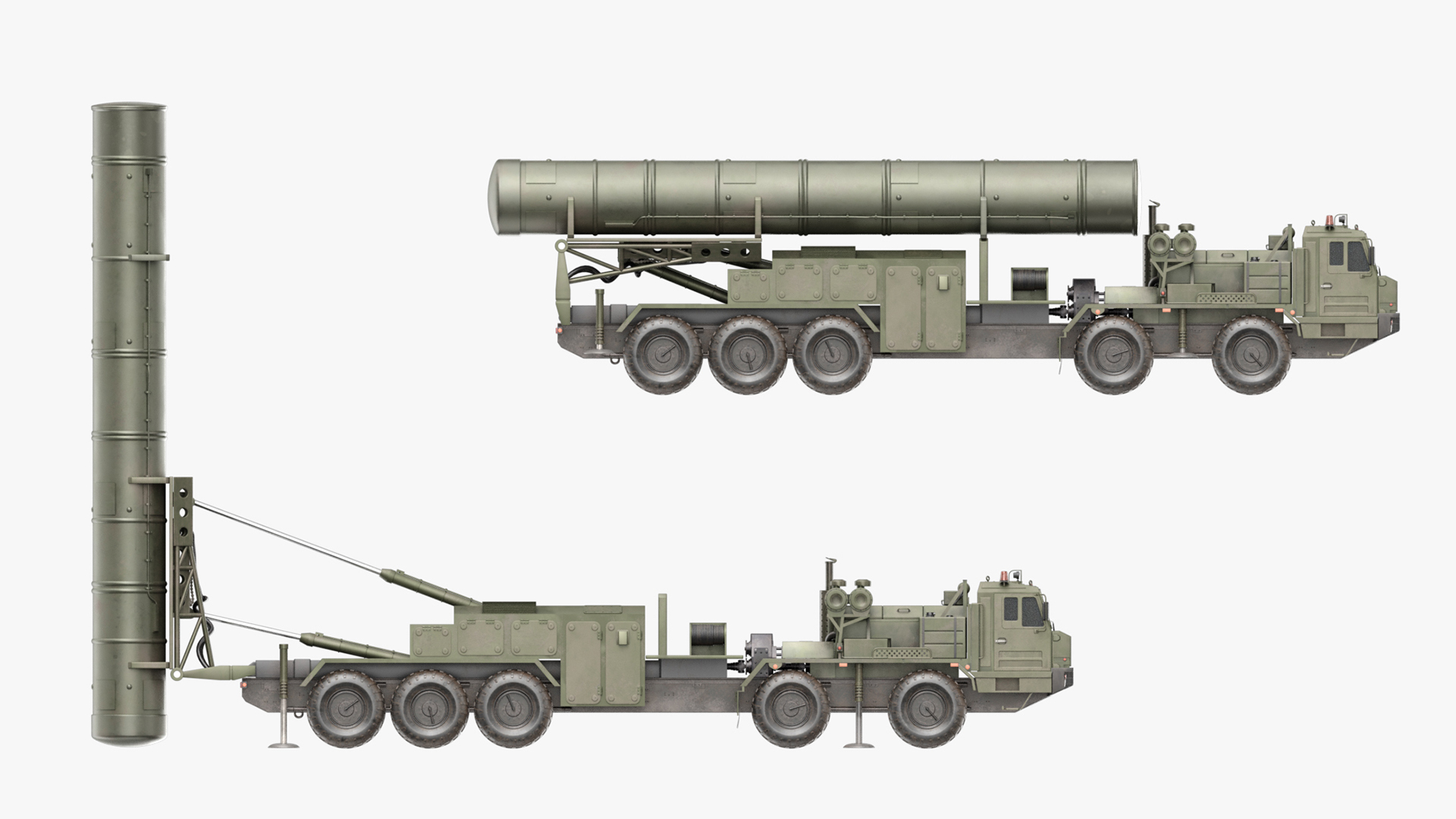
Russia’s S-500 “Prometey” air defense system is promoted as one of the most advanced missile defense platforms in the world. Designed to intercept stealth aircraft, hypersonic weapons, ballistic missiles, and even low-orbit satellites, the system represents a major step in modern air defense.
However, in a real war scenario, even the most advanced system can be challenged, bypassed, or neutralized through layered military strategy.
This article examines how the United States military could counter the S-500, focusing on realistic war-time tactics, technological advantages, and strategic vulnerabilities, presented in simple and clear language for a global audience.
What Is the S-500 and Why It Is Important
The S-500 is Russia’s next-generation air and missile defense system, developed to protect high-value strategic targets, such as:
-
National capitals
-
Nuclear facilities
-
Military command centers
Claimed Capabilities
-
Detection range: up to 600 km
-
Engagement altitude: near-space level
-
Targets include:
-
Stealth aircraft
-
Hypersonic missiles
-
Ballistic missiles
-
Low-Earth-orbit satellites
-
⚠️ Reality Check:
Despite its advanced design, the S-500 has limited real combat testing and is currently deployed in very small numbers, reducing its coverage in large-scale conflict.
War Scenario: How a Conflict Could Unfold
In a high-tech military conflict, the United States would not attempt to destroy the S-500 directly in the opening phase. Instead, US strategy would focus on system disruption, rather than brute force.
The objective would be to:
-
Blind the system
-
Overload its capacity
-
Exploit detection gaps
-
Disable supporting infrastructure
Phase 1: Cyber and Electronic Warfare – Blinding the System
Modern missile defenses rely heavily on radars, data links, and command software.
US Counter-Measures
-
Cyber operations targeting radar software
-
Electronic jamming to disrupt tracking
-
Signal spoofing to create false targets
-
Interference with satellite-based communications
🧠 Why this matters:
A missile defense system that cannot accurately detect or communicate becomes ineffective, regardless of missile quality.
Phase 2: Saturation Attacks – Overwhelming the Shield
The S-500 can track multiple targets, but it has finite interceptor missiles.
US Tactics
-
Launching waves of decoy drones
-
Firing multiple cruise missiles simultaneously
-
Using inexpensive unmanned systems to exhaust interceptors
💰 Cost imbalance:
-
One S-500 interceptor costs millions of dollars
-
Many US decoys cost a few thousand dollars
This creates economic and operational pressure on the defense system.
Phase 3: Stealth and Low-Altitude Penetration
The S-500 is optimized for high-altitude threats, which creates vulnerabilities at low altitude.
US Platforms Involved
-
B-2 Spirit stealth bombers
-
F-35 Lightning II fighters
-
Terrain-hugging cruise missiles
✈️ These assets reduce radar visibility and shorten reaction time, allowing strikes from unexpected directions.
Phase 4: Hypersonic and Multi-Domain Attacks
The United States would apply pressure from multiple domains simultaneously.
Combined Operations
-
Hypersonic glide weapons with unpredictable flight paths
-
SM-6 missiles launched from naval vessels
-
Coordinated air-sea-space strike operations
⚠️ Hypersonic threats are particularly difficult to counter due to their speed, maneuverability, and reduced warning time.
Phase 5: Targeting the Support Network
The S-500 is not a single launcher, but a networked system.
Critical Vulnerabilities
-
Radar vehicles
-
Command and control units
-
Power supply systems
-
Logistics and reload vehicles
🎯 Disabling these components can neutralize the system without destroying the launchers themselves.
S-500 Performance: Strengths and Limitations
Strengths
-
Advanced radar coverage
-
Long-range interception
-
Strong deterrence value
Limitations
-
Limited operational deployment
-
No large-scale combat record
-
Vulnerable to saturation and electronic warfare
-
High operational and maintenance costs
Strategic Assessment: No System Is Invincible
Modern warfare is not decided by a single weapon system. The US military doctrine emphasizes:
-
Multi-layered operations
-
Integration across domains
-
Speed and adaptability
-
Information dominance
The goal is not to defeat the S-500 directly, but to render it ineffective.
Conclusion
Russia’s S-500 is a powerful defensive system, but in a real war scenario, its effectiveness would depend on:
-
Situational awareness
-
Network integrity
-
Logistical support
-
Resistance to electronic and cyber attacks
The future of warfare lies in control of the entire battlefield—air, land, sea, space, and cyberspace—not in any single shield or missile.
Comments
Post a Comment